
Once you know your system size, the next decision is the system type. Each one suits a different situation.
On-grid (grid-tied)
Panels feed your home first, and any surplus goes to the grid. There are no batteries, so the upfront cost is lower.
- Best for: homes with mostly daytime usage and reliable grid supply
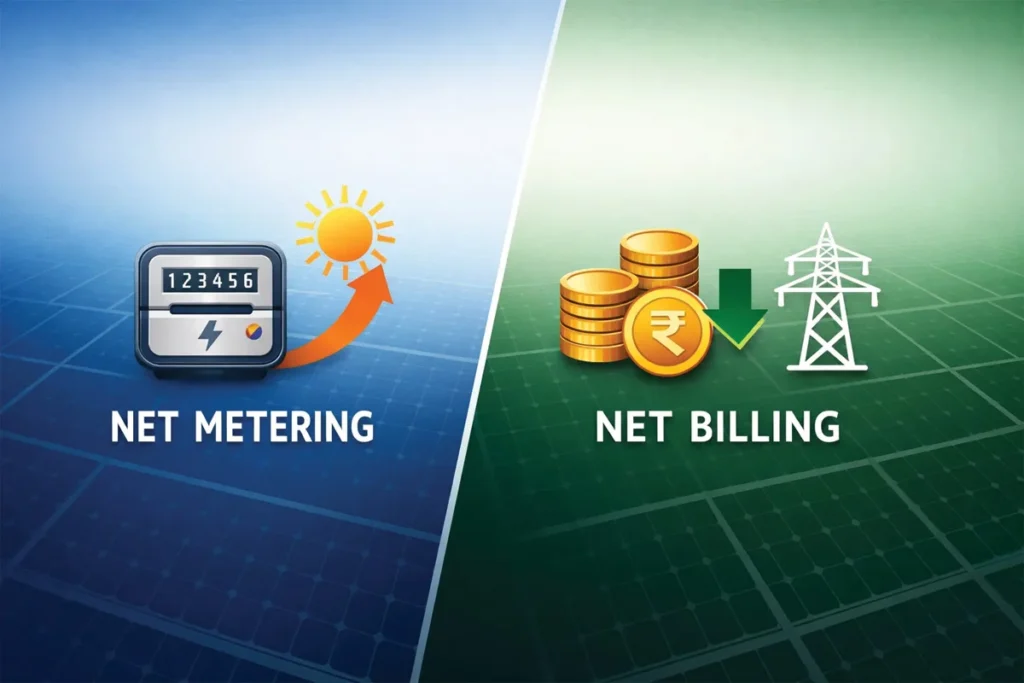
- Watch out: it shuts down during a power cut, and surplus is exported at the lower buyback rate
Hybrid
A hybrid system connects to both the grid and a battery. Solar powers your home, charges the battery, and any remainder can be exported.
- Best for: homes with evening usage, frequent load-shedding, or a wish to use more of their own solar power
- Watch out: higher upfront cost because of the battery
Off-grid
No grid connection at all. Panels and batteries supply everything.
- Best for: farms, remote locations and tube wells with no reliable grid
- Watch out: it needs larger batteries and careful sizing to cover cloudy days
Why batteries matter more now
Under net billing, batteries have moved from luxury to investment, with a much clearer payback. Instead of exporting your midday surplus at a low rate and buying it back at the full tariff in the evening, you store it and use it yourself.
Which one should you choose?
| Your situation | Suggested system |
|---|---|
| Daytime use, stable grid | On-grid |
| Evening use or frequent outages | Hybrid |
| No grid access | Off-grid |
Sun Energy also offers BESS (Battery Energy Storage System) solutions. Contact us for a free consultation and we’ll recommend the right setup for your usage.